Easy Build
Kids Chair
Design Brief
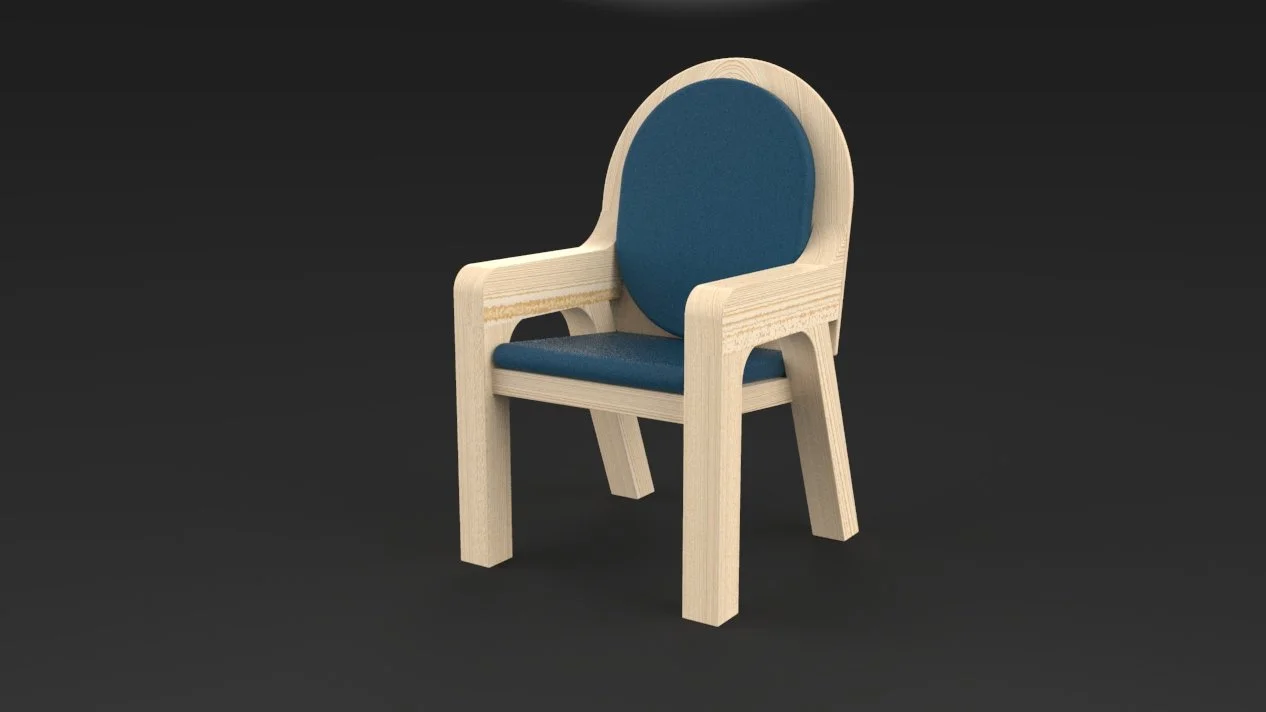
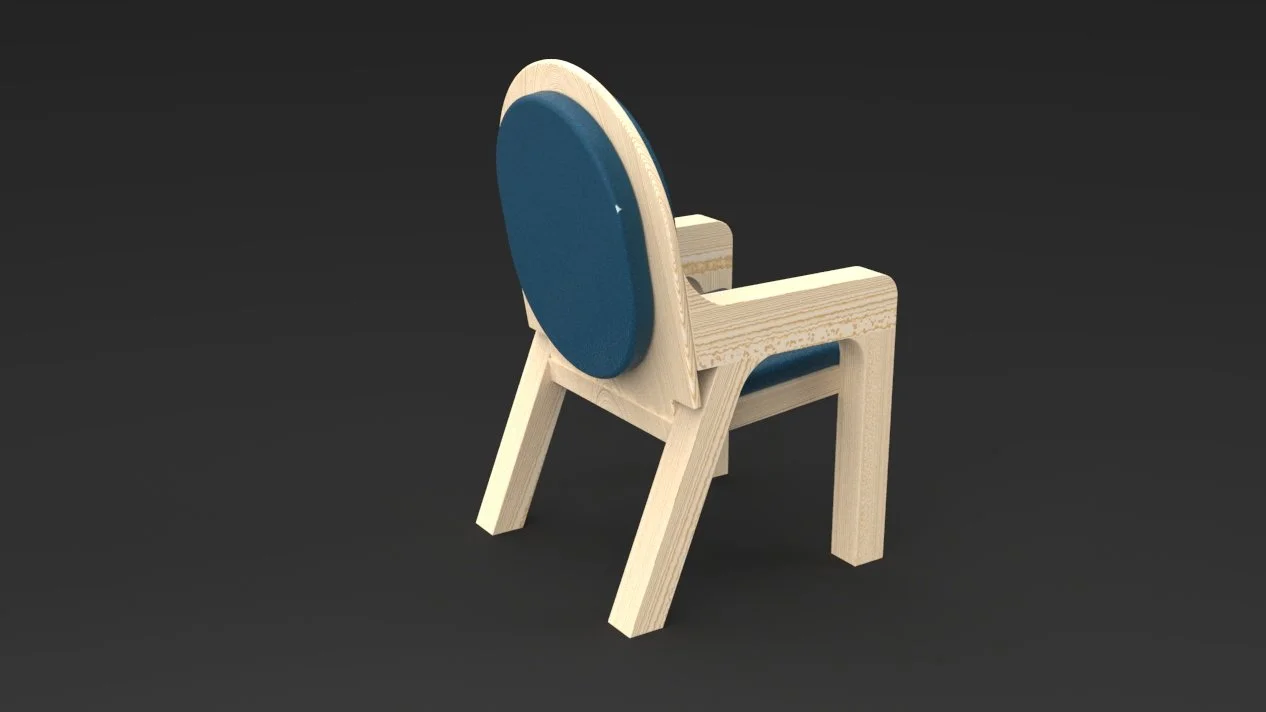
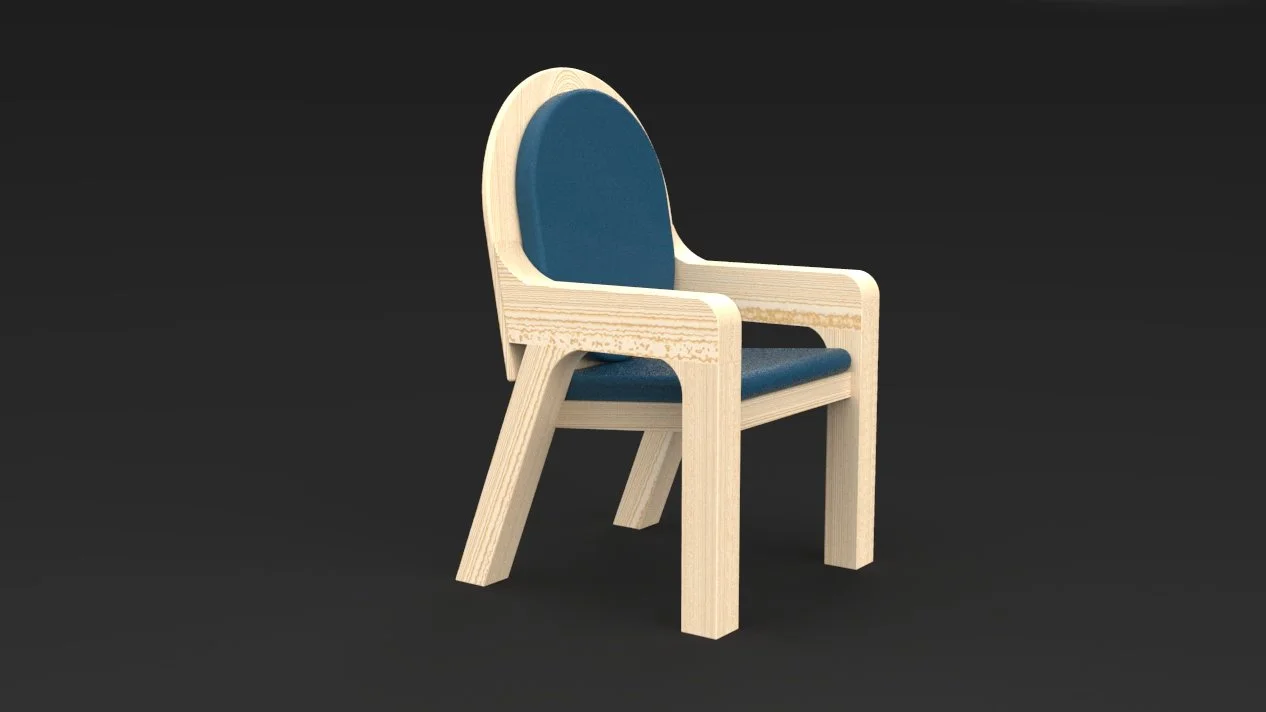
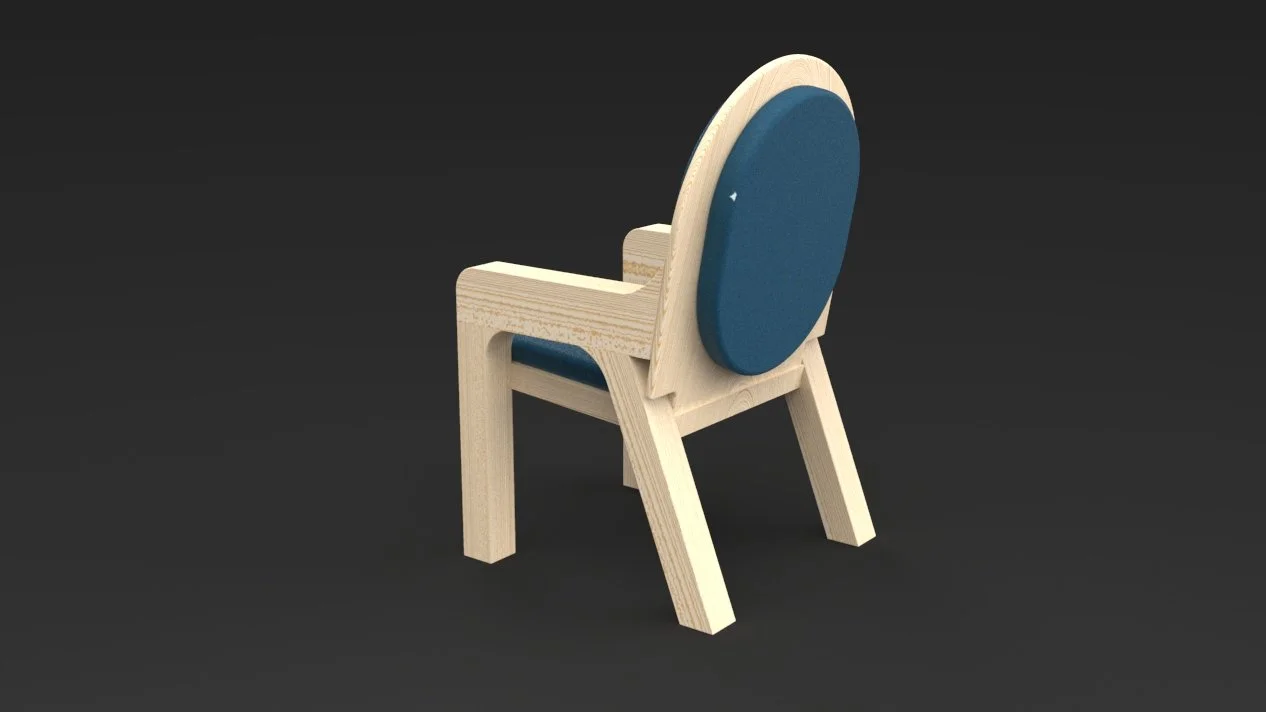
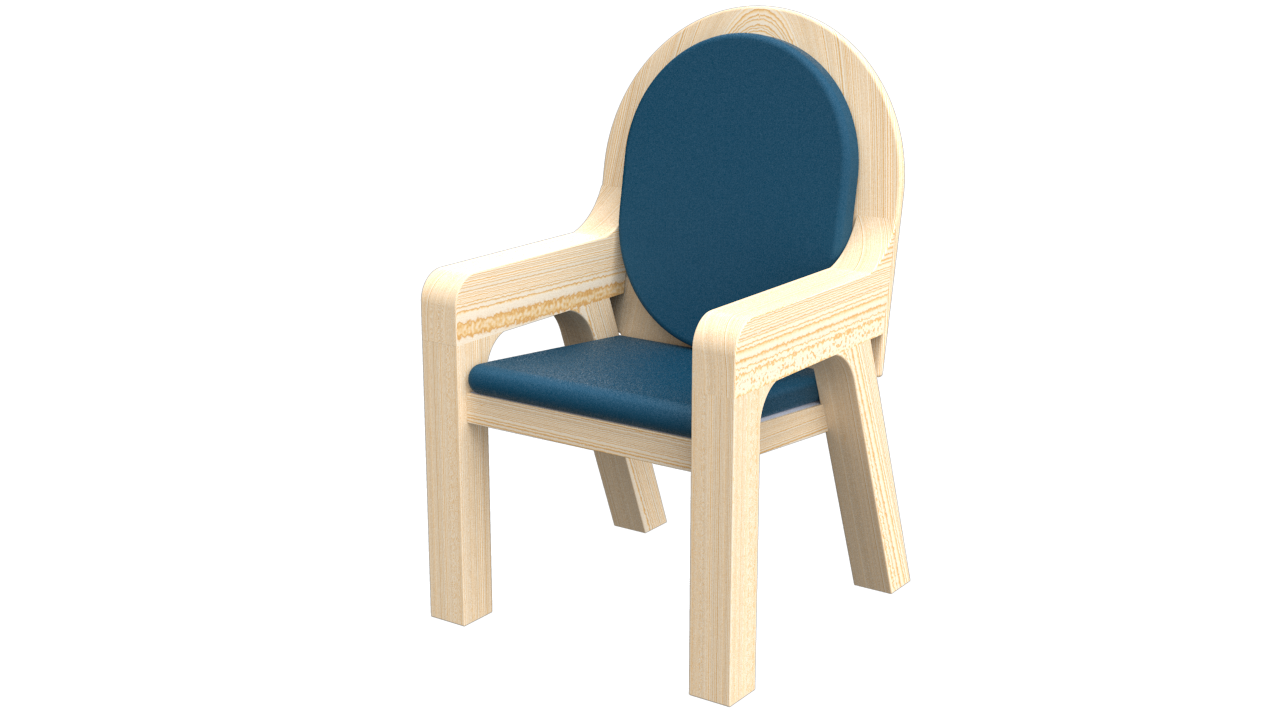
This was an individual project with the main goal of designing a chair for manufacturable purposes. This simple chair was made for dorm room like settings and is designed to be not only manufactured but also easy to build. This project involved soldier sketching, understanding of material properties, basic manufacturing, and tech packages.
Duration: 4 Weeks
Project Type: Individual
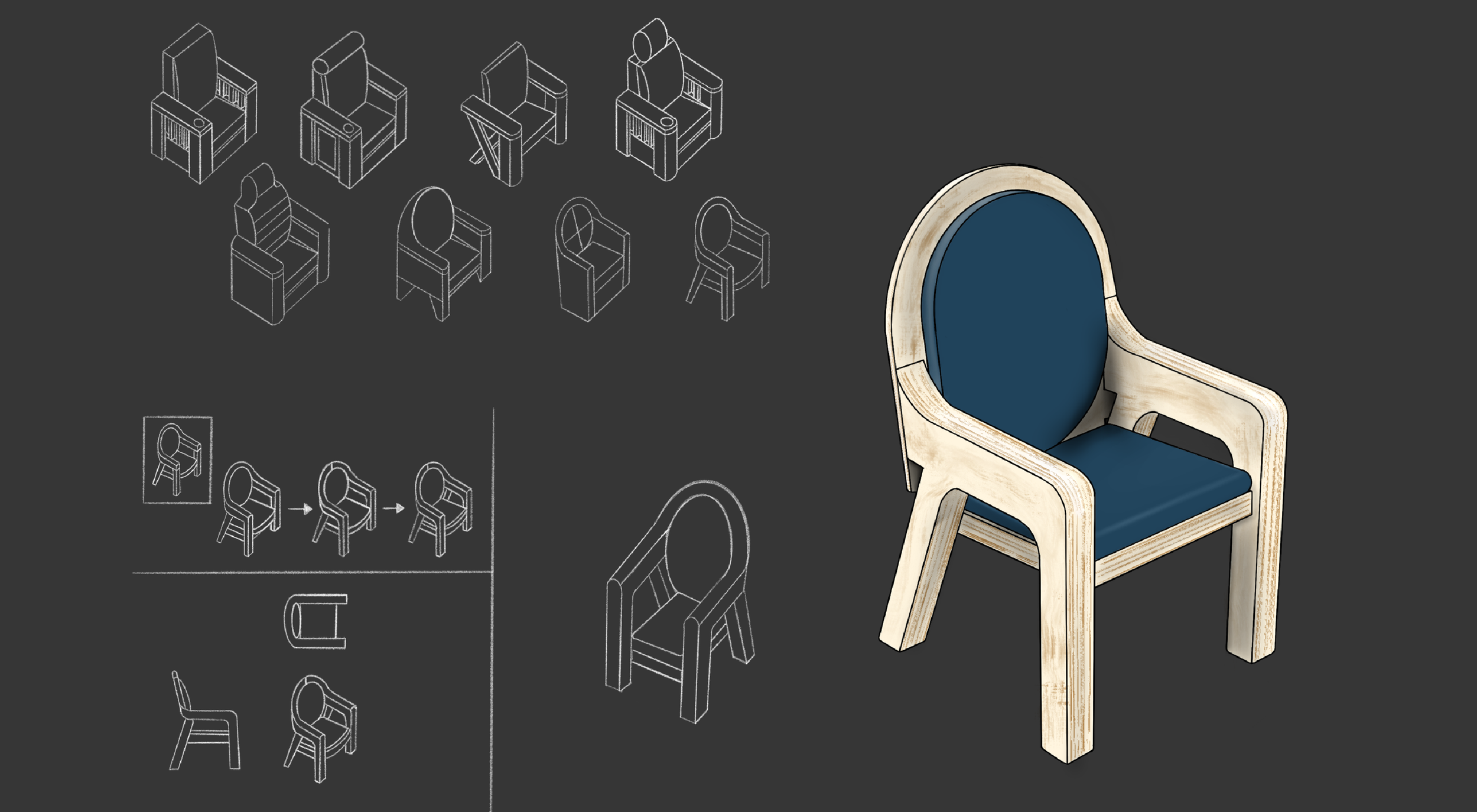
During the drawing ideation phase, I explored multiple concepts for an easy-to-build chair, focusing on simplicity, clarity of form, and efficient construction. Sketching allowed me to quickly test different structures, materials, and connections while refining the overall shape. This process helped narrow the design to a concept that balanced ease of fabrication with functionality and comfort.
Ideation Phase
Prototype One
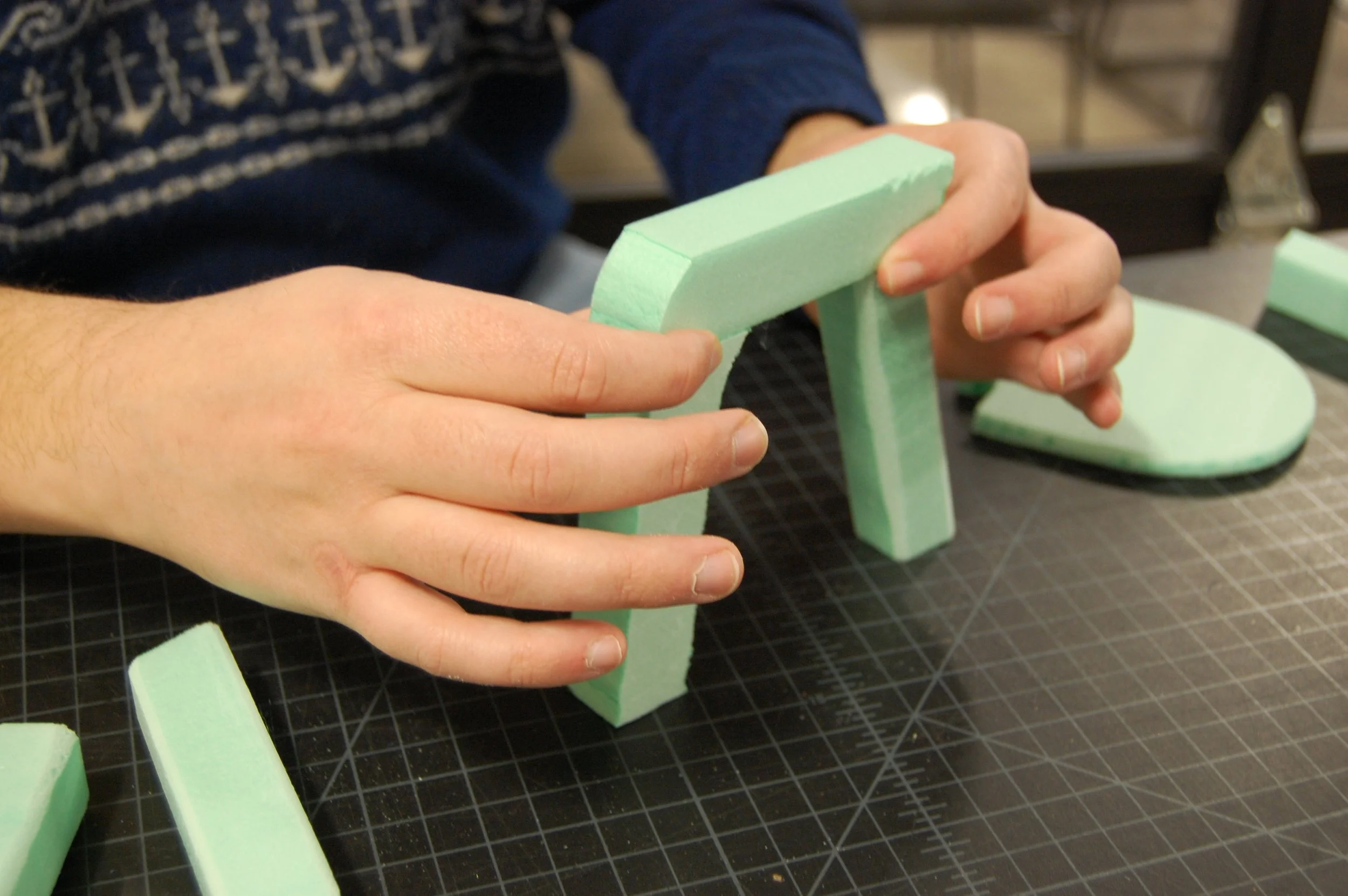
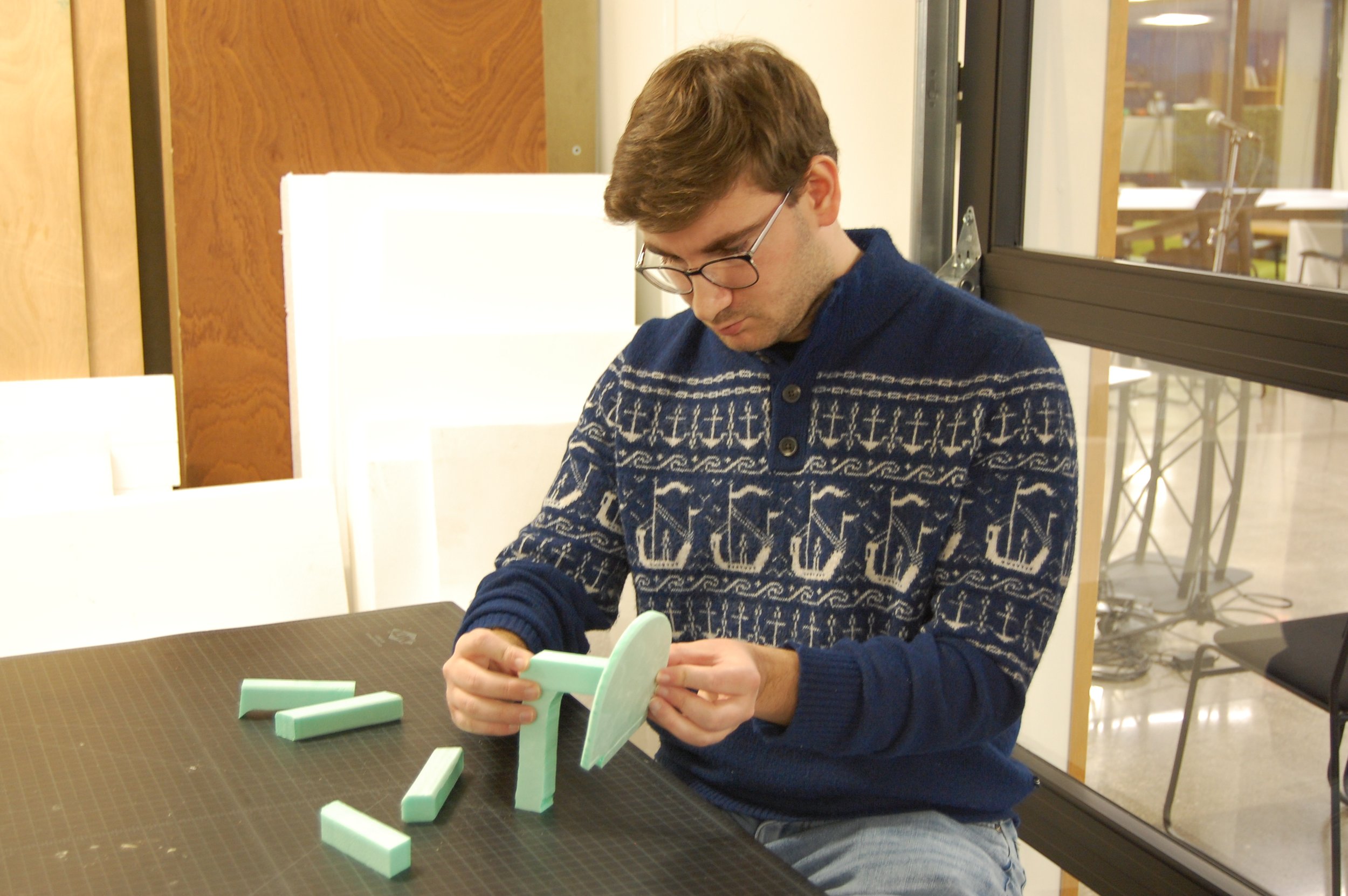
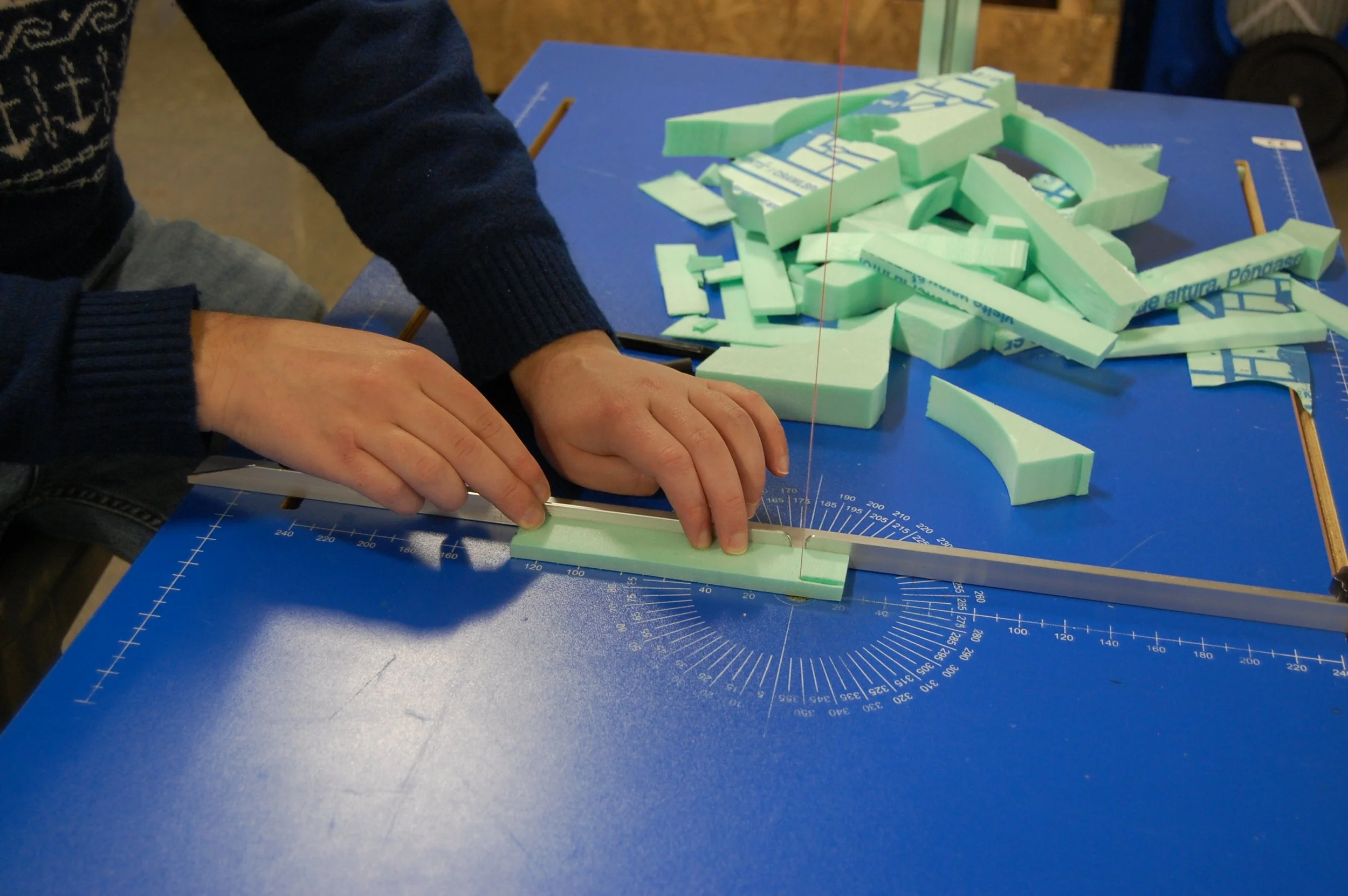
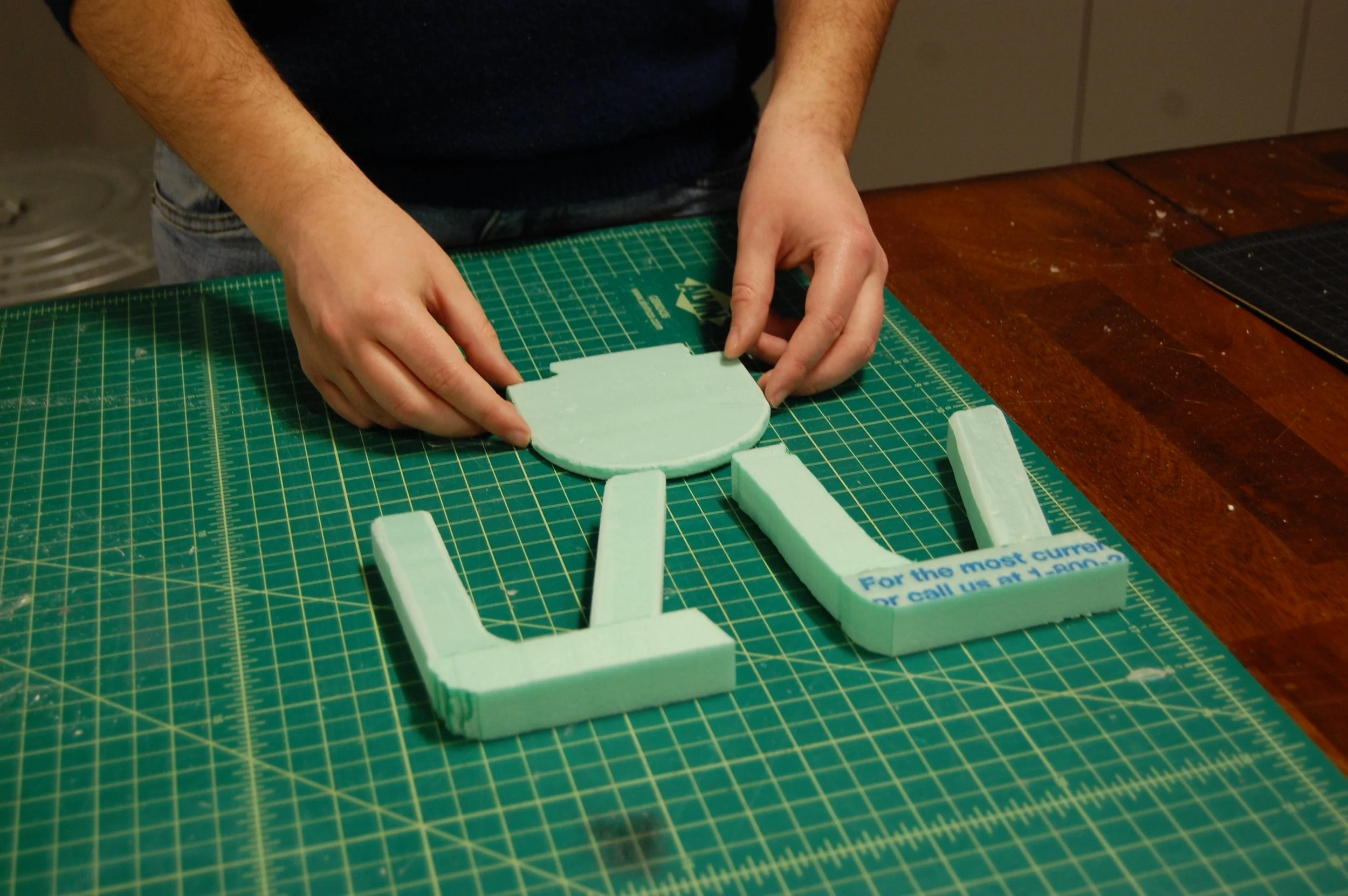
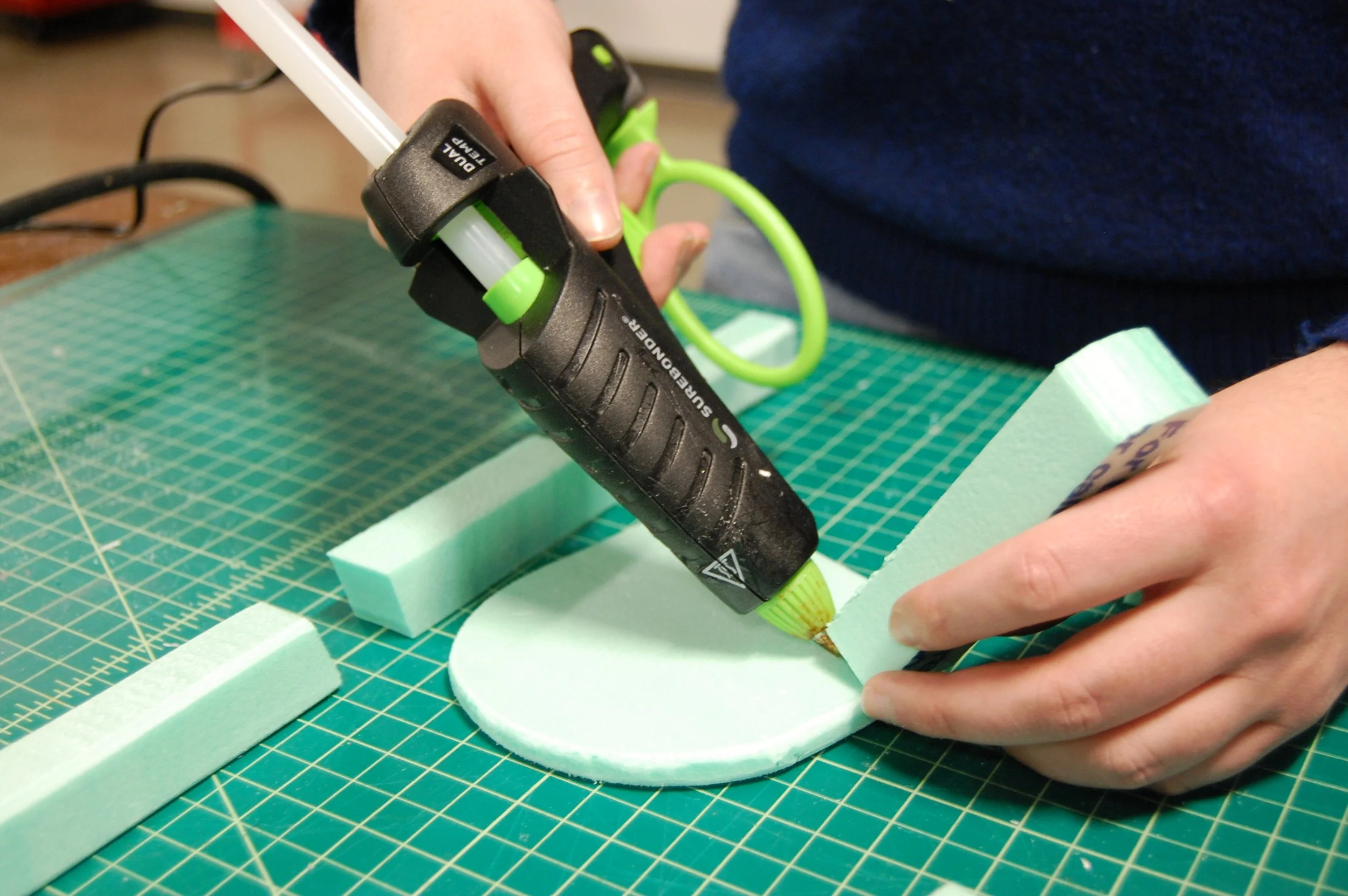
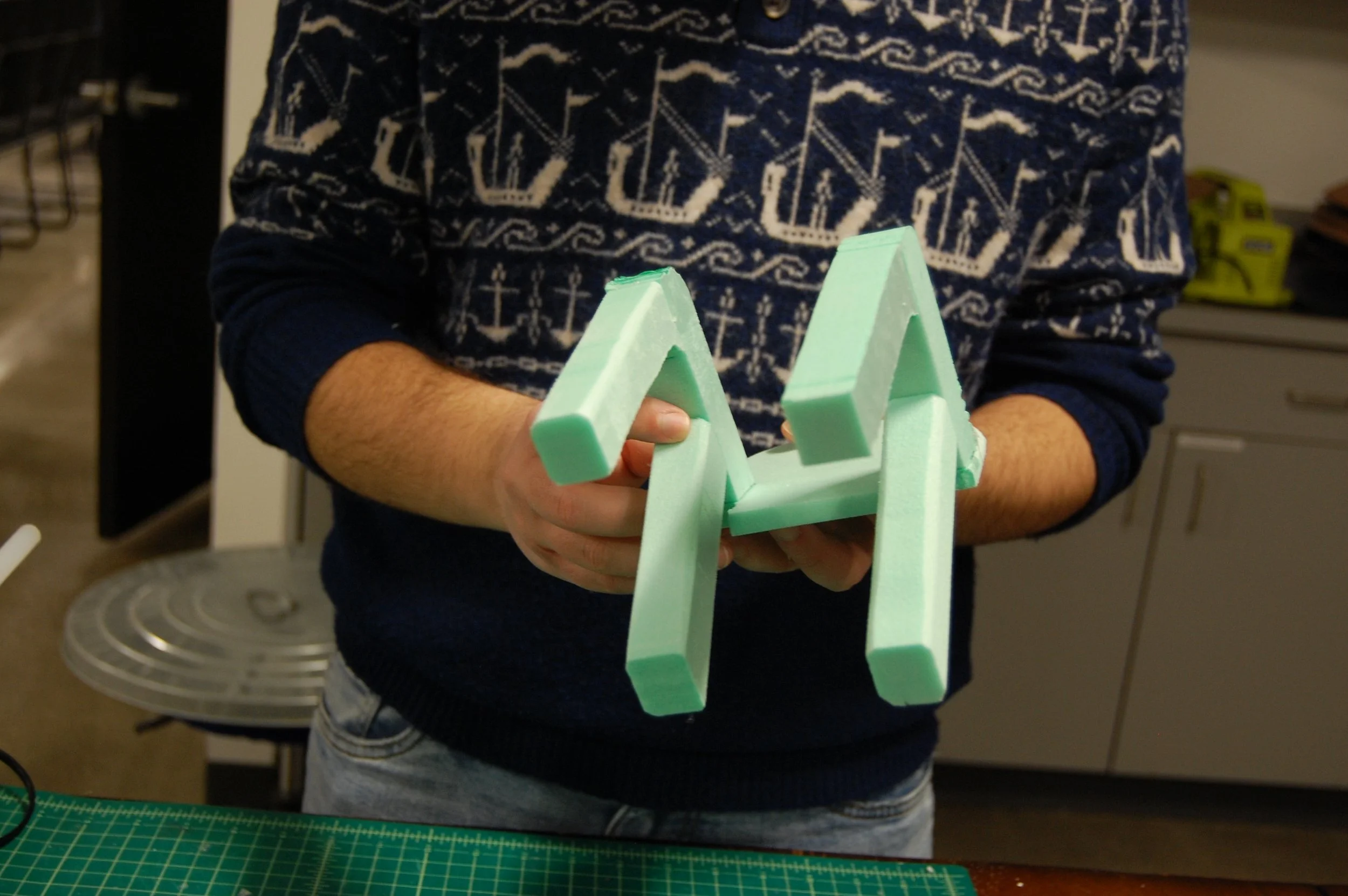
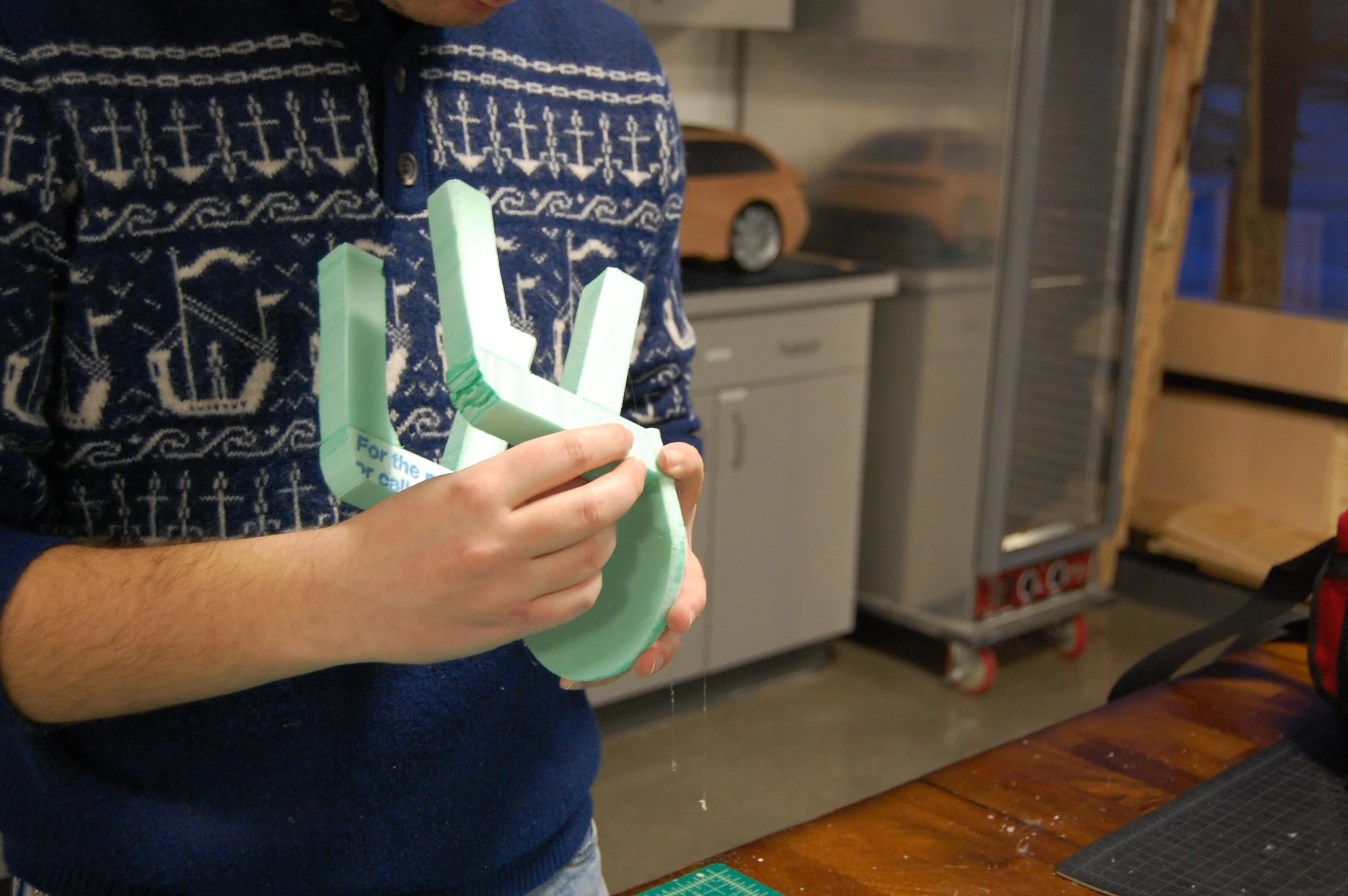
I made a small foam prototype of the chair to better understand its form, proportions, and structure. Working at a reduced scale allowed me to quickly test ideas and identify issues that weren’t obvious in drawings alone. Based on this hands-on exploration, I made several corrections to improve the overall balance, comfort, and feasibility of the design before moving forward.
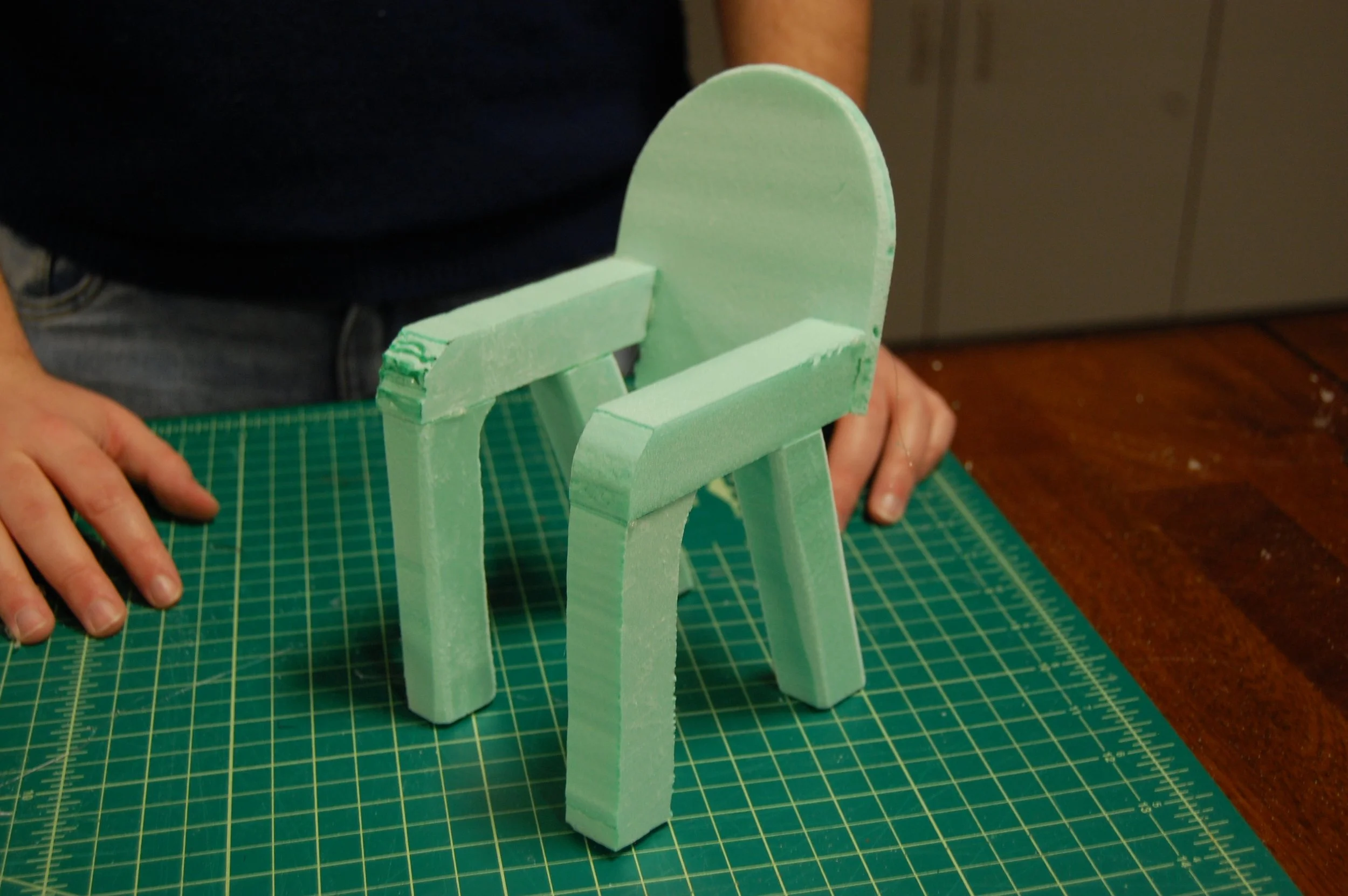
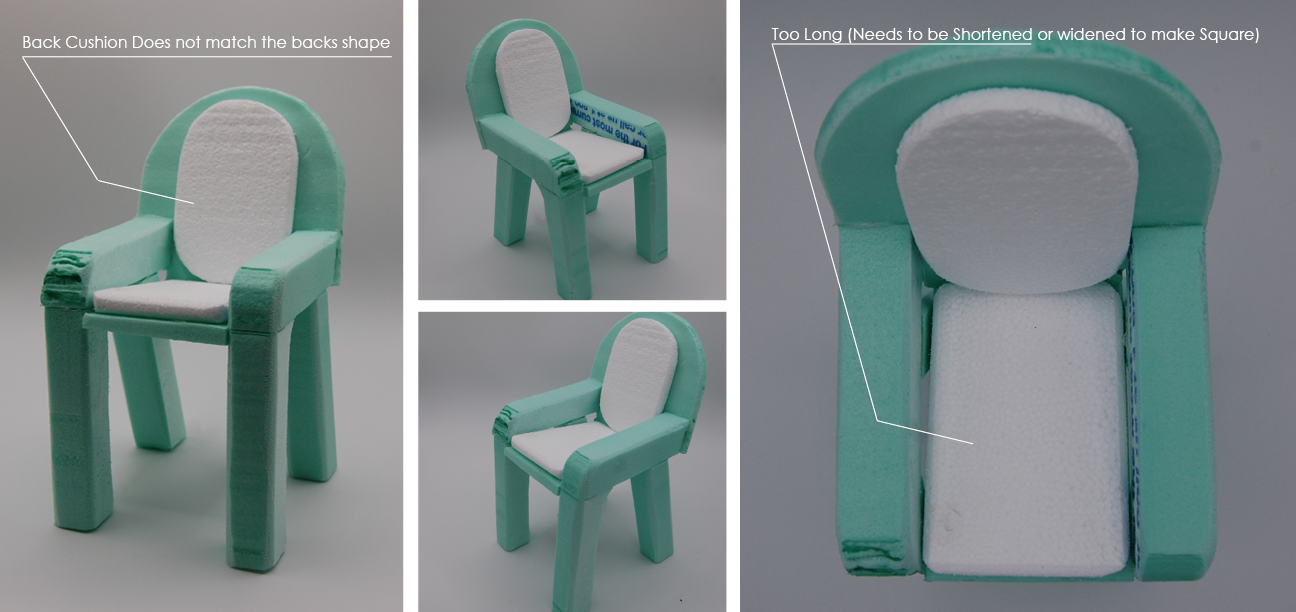
The first prototype revealed a few key issues in the design. The base extended too far forward, making it uncomfortable and impractical for a person to sit in. Additionally, the back cushion was not properly proportioned to the chair’s back, which affected both comfort and the overall visual balance. These observations helped guide adjustments in the next iteration.